
Reading time
8 minutes
The age of the software-defined vehicle (SDV) isn’t on the horizon — it’s already here. While it’s obvious how software-defined features and functionality are changing the modern car itself, software is also quietly, but surely, transforming foundational automotive engineering processes.
Software-led development is not optional today, but imperative. Automakers can no longer take a hardware-first approach that means creating a new, unique software architecture, from scratch, for each new vehicle design. Instead, they need a fast, flexible, software-led development approach that matches the innovative nature of their SDV designs. Cloud-native development enables carmakers to quickly deploy and iterate on virtual prototypes — taking the entire development process to a new level of speed and innovation.
By relying on rapid virtual prototyping, automakers can keep pace with fast-changing consumer demand, as well as the dizzying pace of technology innovation, including agentic AI. As SDV functionality evolves quickly and continuously, automakers need to be first to market with new features that captivate buyers and capture demand. They also need to quickly customize those innovative features for different car models and consumers. That’s simply not possible using traditional development practices that rely on physical hardware.
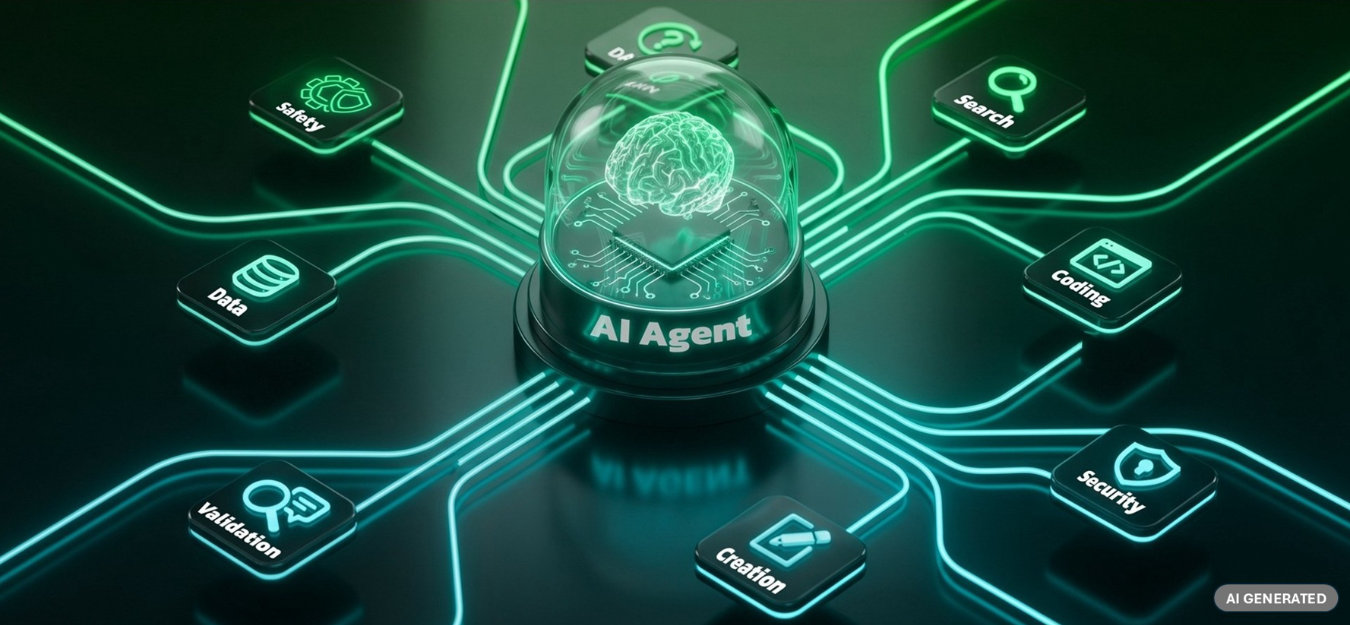
AI is one key technology in the SDV development evolution. From coding to enhanced workflow models to collaboration ecosystems, automotive expertise is substantial for a successful implementation.
HMIs: An engineering opportunity — and a challenge
Perhaps there’s no better example of the value of virtual development and rapid prototyping than the human-machine interfaces (HMIs) that form the physical bridge between enhanced SDV functionality and the car’s occupants. Leading-edge touch screens, voice-recognition systems, and other controls are a critical point of differentiation for consumers who are seeking the look, feel, ease, and convenience of their smartphones.
But, by nature, HMIs are complex and challenging to engineer. They combine advanced electronics, hardware, software, displays, and controls. Engineers must simultaneously consider accuracy, ease of use, and aesthetics. And HMIs must be flawlessly integrated with all the advanced electronics and embedded software that comprise the modern SDV.
This design complexity has led to traditional HMI engineering processes that are slow and painstaking, characterized by frequent design iterations, manual handoffs, and long feedback loops across diverse teams. Multiple physical tests and prototypes only add to the time and expense of designing and verifying HMIs.
These traditional development methods are increasingly at odds with today’s SDV engineering landscape, where speed, innovation, and customization are the keys to market leadership.
The truth is that HMI engineering represents a significant launch bottleneck today. To lead in the age of the SDV, automakers need to address that challenge with urgency.
Low code, high speed: Launch innovative HMIs faster
A new Elektrobit tech paper highlights a forward-looking solution. From concept to cockpit: HMI innovation with low-code development illustrates the benefits of cloud-native virtual development and rapid prototyping for cockpit HMIs.
Virtual-first SDV development enables teams to develop, validate, and iterate on their HMI designs without physical hardware. It’s an emerging best practice that allows HMI engineering teams to quickly go from design files to working prototypes that perform as expected — driving a fast, confident market launch. Low-code rapid prototyping has the potential to exponentially increase both HMI design innovation and speed.
Critically, this virtual environment supports multiple software stacks — including Android Automotive up to AAOS SDV, Linux, and Classic AUTOSAR — with SOME/IP bridging for cross-domain integration, ensuring HMI development isn’t locked to a single platform or architecture.
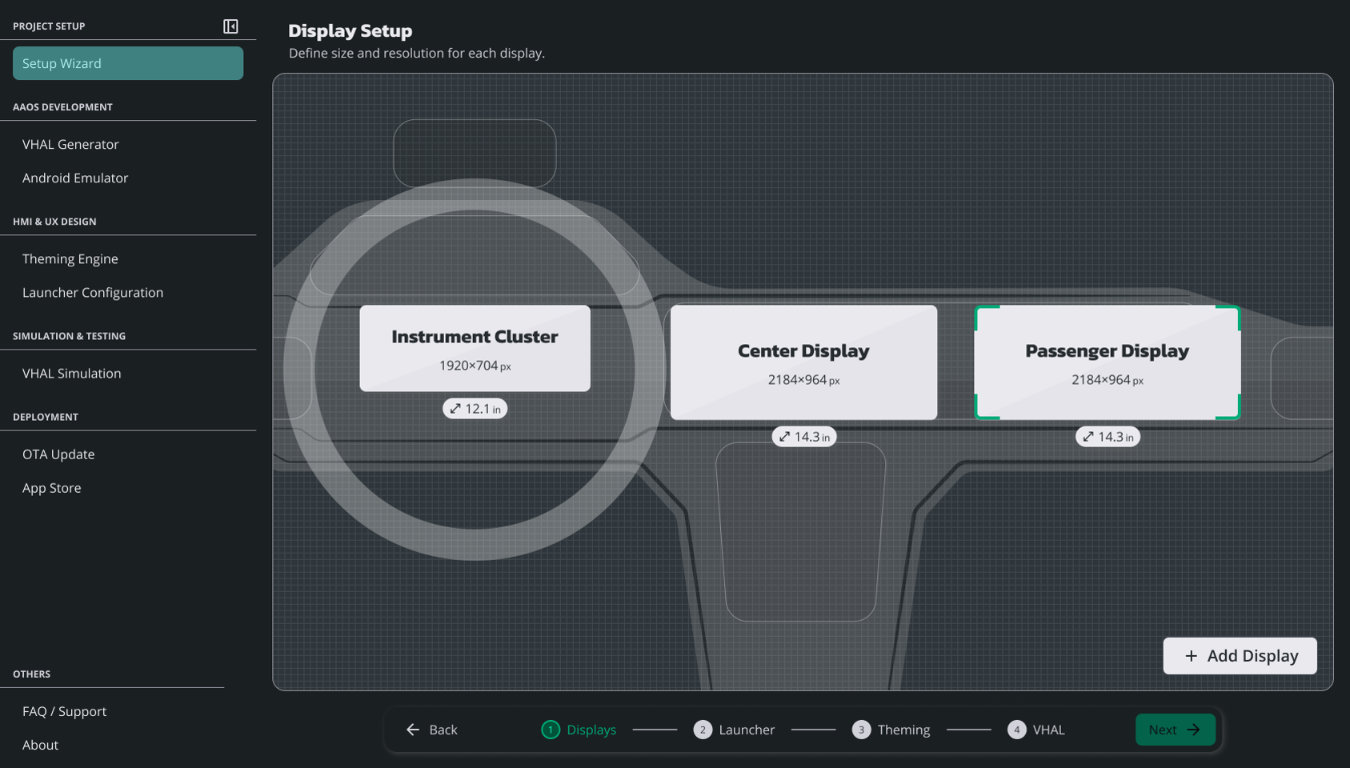
Low-code development integrates tools with graphical user interfaces (GUIs) to leverage creativity and accelerate UX/UI design processes.
Using this approach, HMI development teams consider field operating conditions, performance demands, and implementation details from the earliest stages of design. Instead of working with assumptions, developers collaborate in a shared virtual environment where they simulate vehicle signals and map interface data, informing their design decisions with insights into realistic operating conditions. Virtual prototyping creates a digital thread that links even the most preliminary HMI design choices directly to deployment.
Virtual tooling provides a common platform, a unified cross-disciplinary workflow, and a shared design toolkit that connect all team members for real-time collaboration. Built on containerized, hypervisor-abstracted infrastructure, this platform runs consistently across cloud and edge environments, eliminating “works on my machine” integration gaps between distributed teams.
Time-consuming sequential design reviews and manual handoffs are eliminated, replaced with a streamlined virtual design landscape in which feedback is immediate. It’s much faster, easier, and more cost-effective to drive HMI innovation in this low-risk, dynamic design landscape.
Equally important, a virtual-first approach emphasizes and leverages re-usability, so the HMI engineering team isn’t starting from scratch with every new interface design or brand variant. Leveraging AI-assisted workflows, HMI elements can be rapidly composed from pre-built components and templates, significantly reducing manual effort.
Re-usable design elements and theming assets also ensure consistent branding across vehicle lines, reducing redundant design work. As the team rolls out a range of design variants across different models, tedious theming and branding tasks are automated and accelerated.
Increased engineering efficiency is only the beginning
Backed by decades of SDV leadership, Elektrobit understands exactly how to help HMI engineering teams work smarter, faster, and more confidently. Elektrobit’s SDV experts capitalize on agentic AI and other advancements to deliver practical customer value.
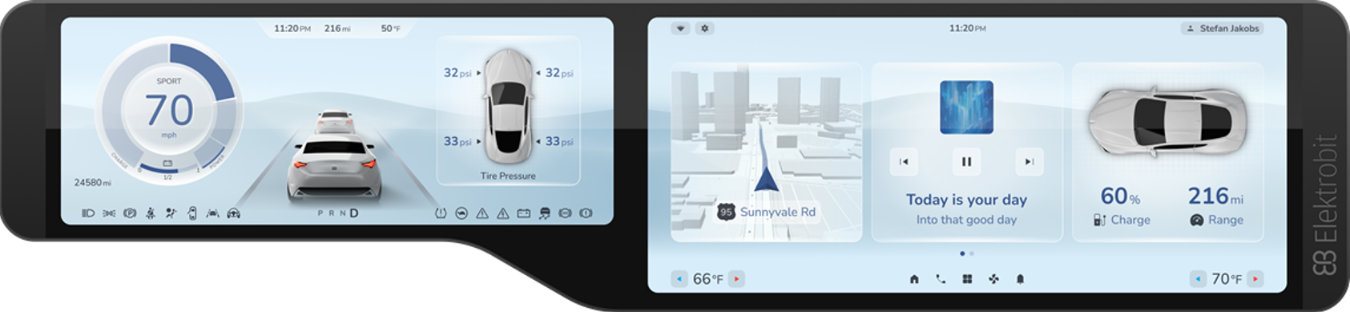
Virtual, cockpit HMI development solutions like EB civion Creator …
Low-code visual tooling that minimizes manual coding, the re-use of design assets and themes, and virtual prototyping directly address the day-to-day challenges faced by HMI engineers. Elektrobit’s virtual-first approach, supported by EB civion Creator, replaces traditional HMI development methods that frustrate stakeholders and slow the overall launch process.
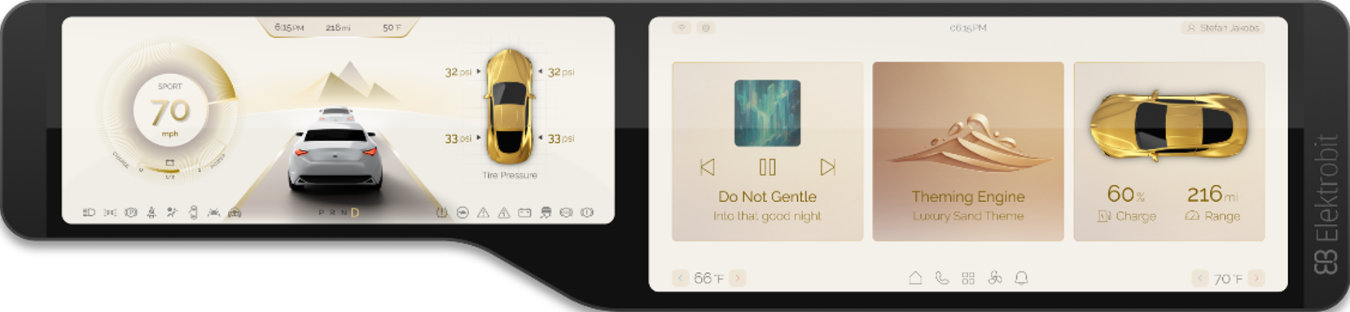
… enable hardware-independence and rapid prototyping in simulated target environments.
Increased engineering efficiency is a game-changer, but it’s only the beginning of the benefits SDV manufacturers can realize from virtual-first development. Those benefits also include:
- Faster, more meaningful innovation. SDV technology moves fast, and consumer demand moves even faster. Automakers must keep pace with these changes, taking their HMI innovations from concept to cockpit as quickly as possible. Low-code HMI prototyping not only speeds innovation, but makes it more impactful. A virtual-first design environment encourages a high degree of experimentation and risk-taking — which simply isn’t supported by traditional development methods.
- Lower prototyping costs. Physical HMI prototypes are time-consuming and expensive to build. And, using traditional development methods, multiple protypes are usually needed to verify HMI performance. But Elektrobit’s virtual-first, template-focused approach makes HMI designs more accurate and visual, with live updates in the virtual modeling phase — which means there are few surprises, if any, at the physical testing stage. Late-stage rework and costly, redundant physical prototypes are minimized.
- Greater collaboration. Elektrobit’s virtual SDV development approach replaces sequential design steps and long feedback loops with scalable, parallel workflows and a unified design landscape where diverse team members participate in real time. Immediate cross-disciplinary design reviews speed development, increase the precision of HMI designs, and enable all stakeholders to share their ideas simultaneously, without slowing the process down.
- Improved user experiences. The ultimate measure of a successful HMI is the ease of use, accuracy, and safety of the interface when it’s used by drivers and passengers. A virtual-first development environment allows the HMI design team to consistently provide a safe, comfortable, and engaging user experience — while also delivering the newest and most advanced HMI features that will excite buyers.
Transform HMI development from a constraint to an advantage
Today SDVs represent the single biggest revenue opportunity for the world’s automakers. But fully capitalizing on this opportunity means overcoming the obstacle of slow HMI development.
Cloud-native virtual prototyping solutions empower teams to develop, validate, and iterate on their HMI designs without physical hardware. Because EB civion Creator feeds directly into EB civion Core’s modular cockpit software and EB civion Cockpit’s ready-to-integrate domain controller solutions, validated virtual designs carry seamlessly through to production — closing the loop from concept to SOP.
This pioneering approach demonstrates the potential of virtual-first HMI development to exponentially increase both design innovation and speed. As virtual-first development grows in its capabilities and adoption, HMIs will be minimized as a bottleneck — allowing automakers to speed their new SDV designs to market.
Read the tech paper From concept to cockpit: HMI innovation with low-code development.
Request the starter kit for EB civion Creator and get your hands on our virtual-first, rapid prototyping solution.
Reach out to discuss how to optimize your current HMI workflows and toolkits for the demands of SDV engineering.
Author

Ayhan AkProduct Manager


